

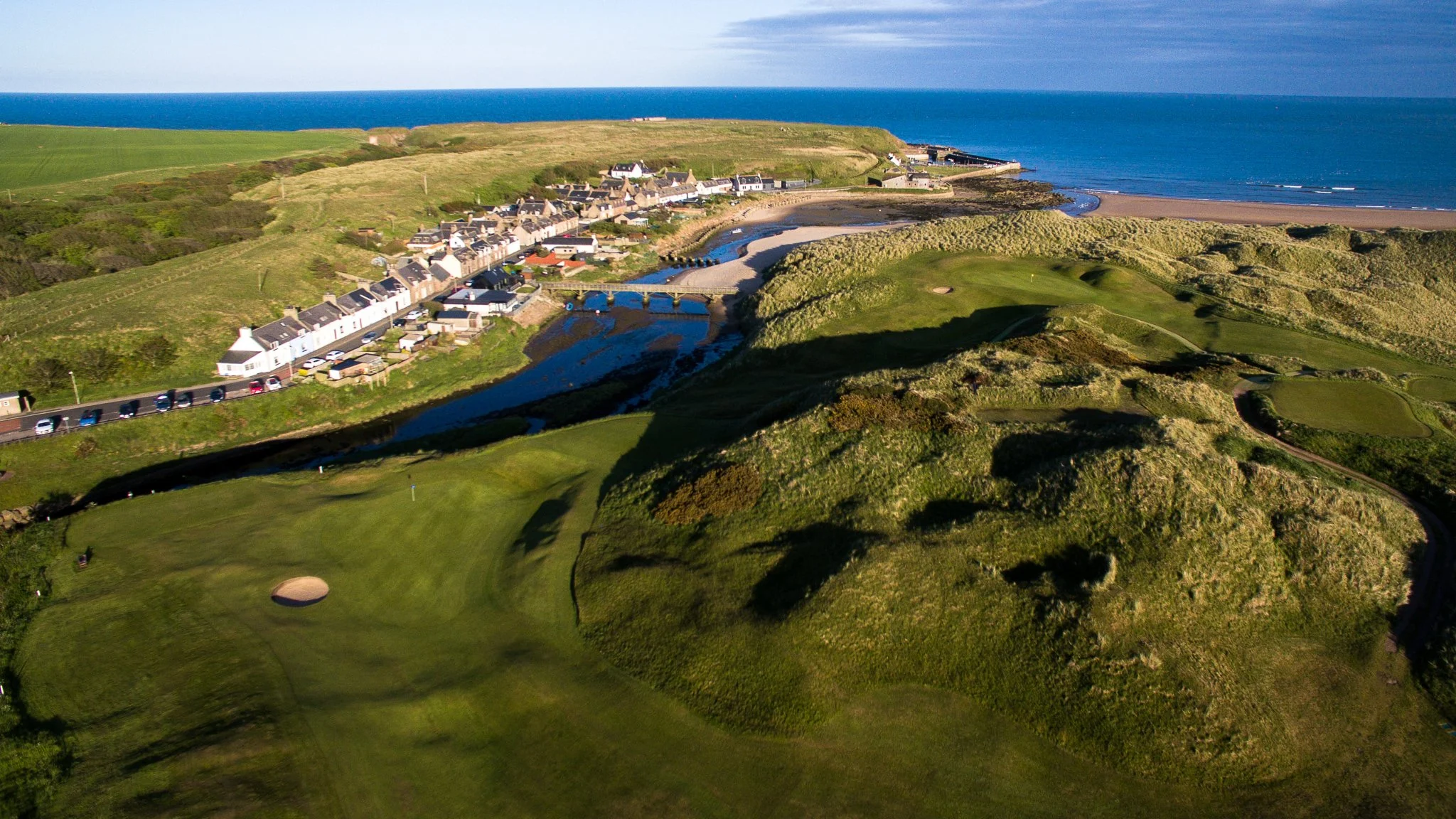
Experience Scotland's Cruden Bay Golf Club
Cruden Bay Golf Club sits on the northeast coast of Scotland in Aberdeenshire, overlooking the North Sea and framed by dramatic dunes and rugged coastline. The links course is widely regarded as one of the classic Scottish seaside layouts, blending natural terrain, coastal wind, and strategic shot-making. The routing takes full advantage of pronounced dunes, deep hollows, and stretches of thick fescue, producing holes that are visually striking and demanding of imagination and precision. Key characteristics include firm, fast fairways and greens, pot bunkers and grassy hollows, and dramatic tee-to-green sightlines where wind and elevation shifts play a central role in scoring.
Signature holes often cited are the short, punchy par-3s that play across dunes and the long, testing par-4s and par-5s that require careful club selection and respect for seaside wind. The routing offers variety—some holes run along the shoreline while others turn inland across more sheltered, undulating ground—so golfers must manage both tactical positioning and turf navigation. The course condition and routing preserve a strong sense of naturalness; many holes feel as if carved by the sea and wind rather than heavily engineered.
History
Founded in 1899, The Golf Club was laid out during the golden age of links golf when seaside courses across Scotland and the British Isles were being formalized and expanded. The early course at Cruden Bay was associated with famed designers and early professionals who helped shape its routing and strategic character. Over the years, the club has been maintained and modified with sensitivity to the original links spirit, retaining many classic features while accommodating modern equipment and playing standards.
Throughout the 20th century, Cruden Bay developed a reputation as a true test of links golf, attracting both local and visiting players who seek a demanding coastal challenge. The course survived two world wars and periods of economic change, during which stewardship by local members and greenkeeping professionals preserved its heritage and natural dune environment. Restoration work at various times focused on bunker re-profiling, green improvements, and managing dune vegetation to restore original lines of play that had become obscured by scrub growth.
Cruden Bay also holds cultural and historical interest beyond golf. The surrounding area includes links to maritime history and local communities shaped by fishing and coastal trade. The clubhouse and facilities reflect the club’s long-standing community role, hosting events and welcoming touring golfers while maintaining membership traditions.
Today Cruden Bay remains a prized Scottish links experience: a seaside course with deep heritage, uncompromising playability, and a setting that captures the elemental drama of coastal golf. It appeals to golfers who value strategic design, strong wind tests, and preservation of classic links character.
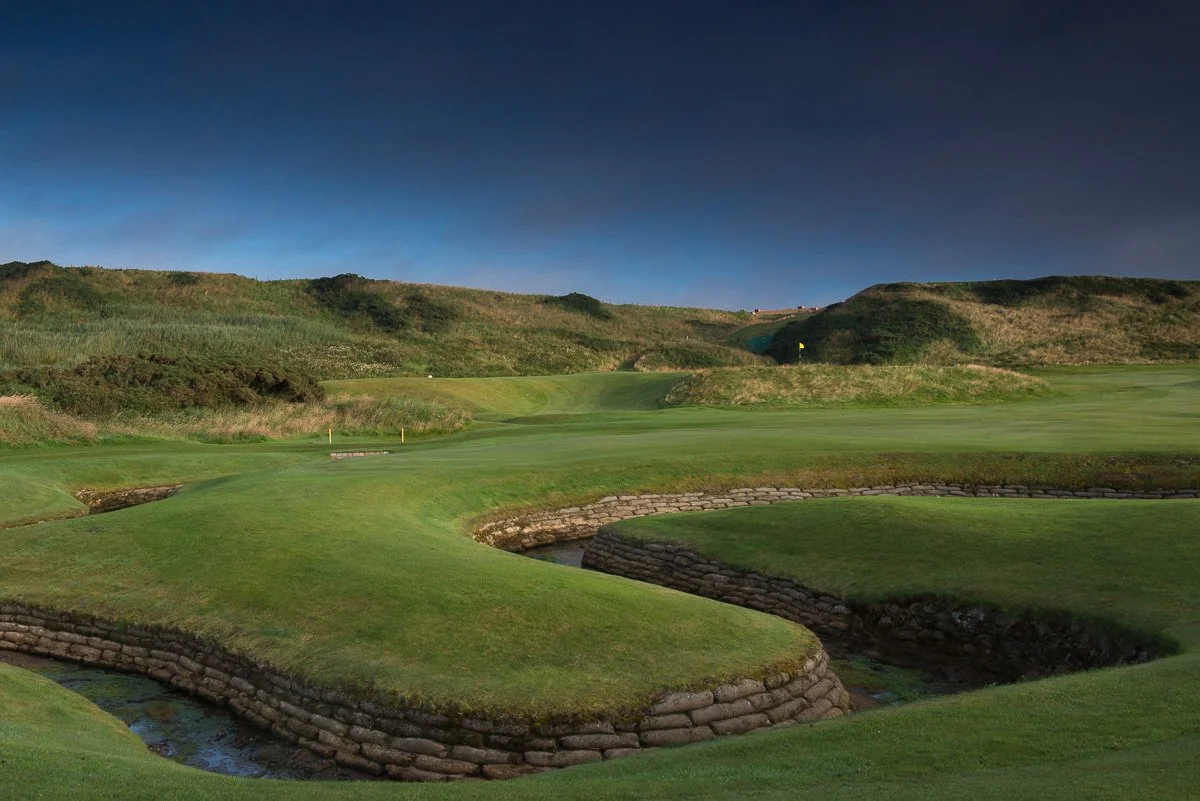
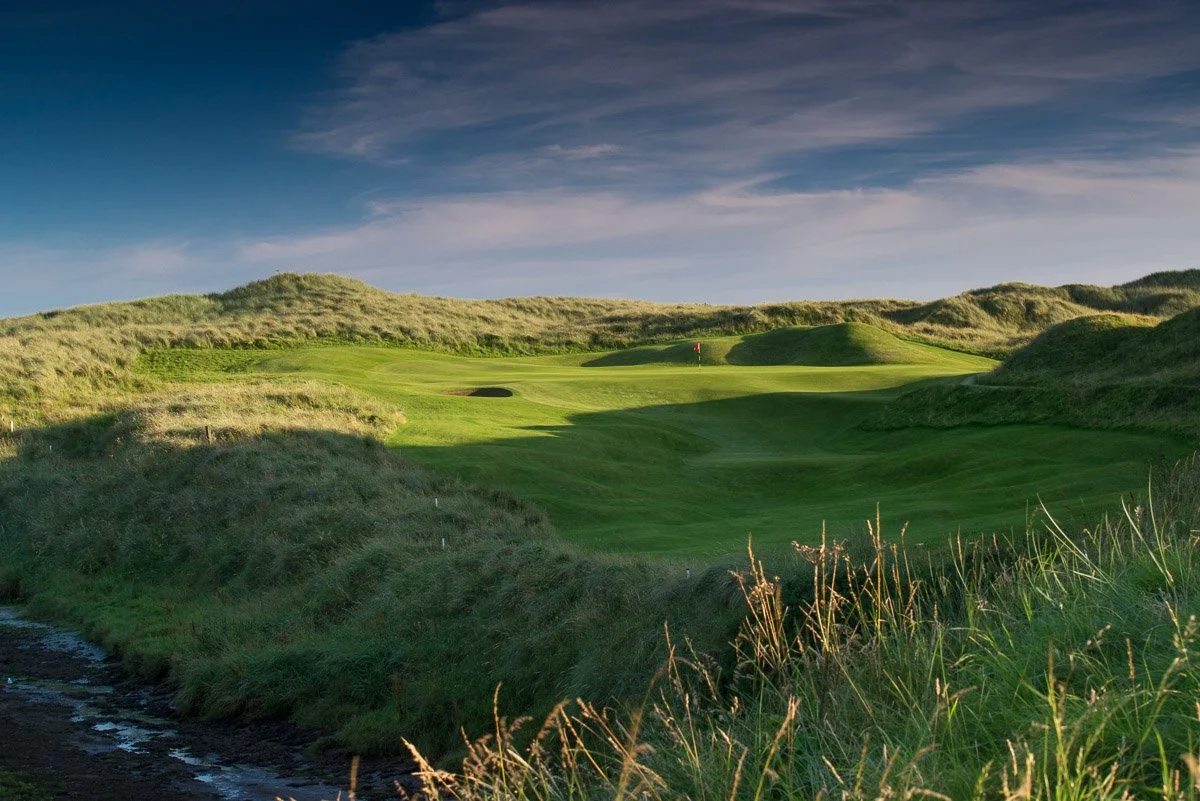
Cruden Bay Golf Club
Cruden Bay is often described as one of the most scenic and unique links experiences in the world.
Panoramic Views: The 9th tee offers one of the most famous views in golf, overlooking the links, the beach, and the ruins of Slains Castle (reputedly the inspiration for Bram Stoker’s Dracula).
Old-Fashioned Links: The course is a "rollercoaster" of a round, featuring several blind shots (such as on holes 13, 14, and 15) that were common in Morris’s era and have been preserved to maintain the course's historic "quirk."
The St. Olaf Course: This shorter 9-hole course is also an original Morris design and serves as a classic example of "fun" links golf, often played as a warm-up to the Championship course.
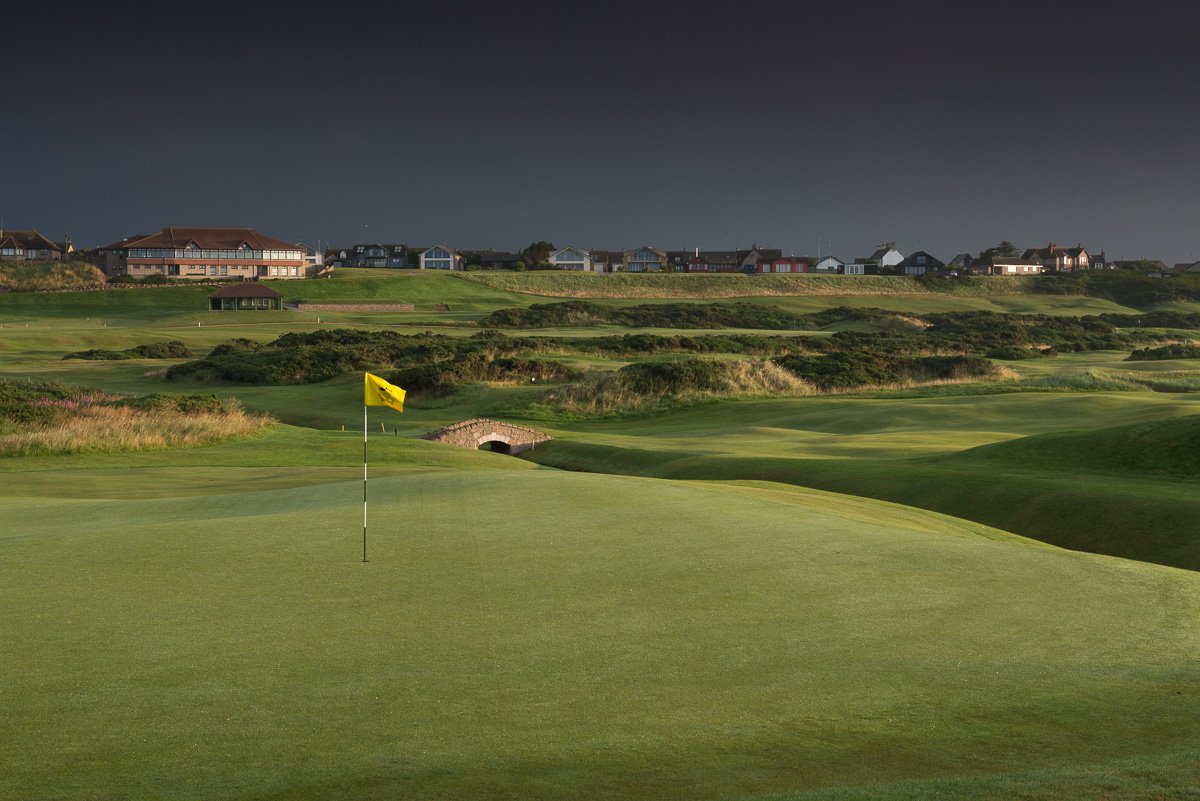
Cruden Bay and Old Tom Morris share a deep historical connection that defines much of the character of this iconic Scottish links.
Old Tom Morris, the legendary four-time Open Champion and "Grandfather of Golf," was commissioned in 1894 by the Great North of Scotland Railway Company to design the course. Working alongside Archie Simpson, he laid out the original 18-hole Championship course and the 9-hole St. Olaf course.
Design Philosophy: True to his style, Morris "found" the holes within the natural landscape rather than forcing them. At Cruden Bay, this resulted in a "whimsical" and dramatic layout that utilizes towering dunes, blind shots, and the rugged coastline of the North Sea.
The 1899 Opening: The course officially opened in 1899 with a grand two-day professional tournament. The event featured some of the greatest names of the era, including Harry Vardon (who won), James Braid, and Archie Simpson.
Legacy in the Modern Layout: While the course was famously redesigned in 1926 by Tom Simpson and Herbert Fowler to its current configuration, many of Morris’s