Old Course at Trump international Scotland
Golf courses near Aberdeen
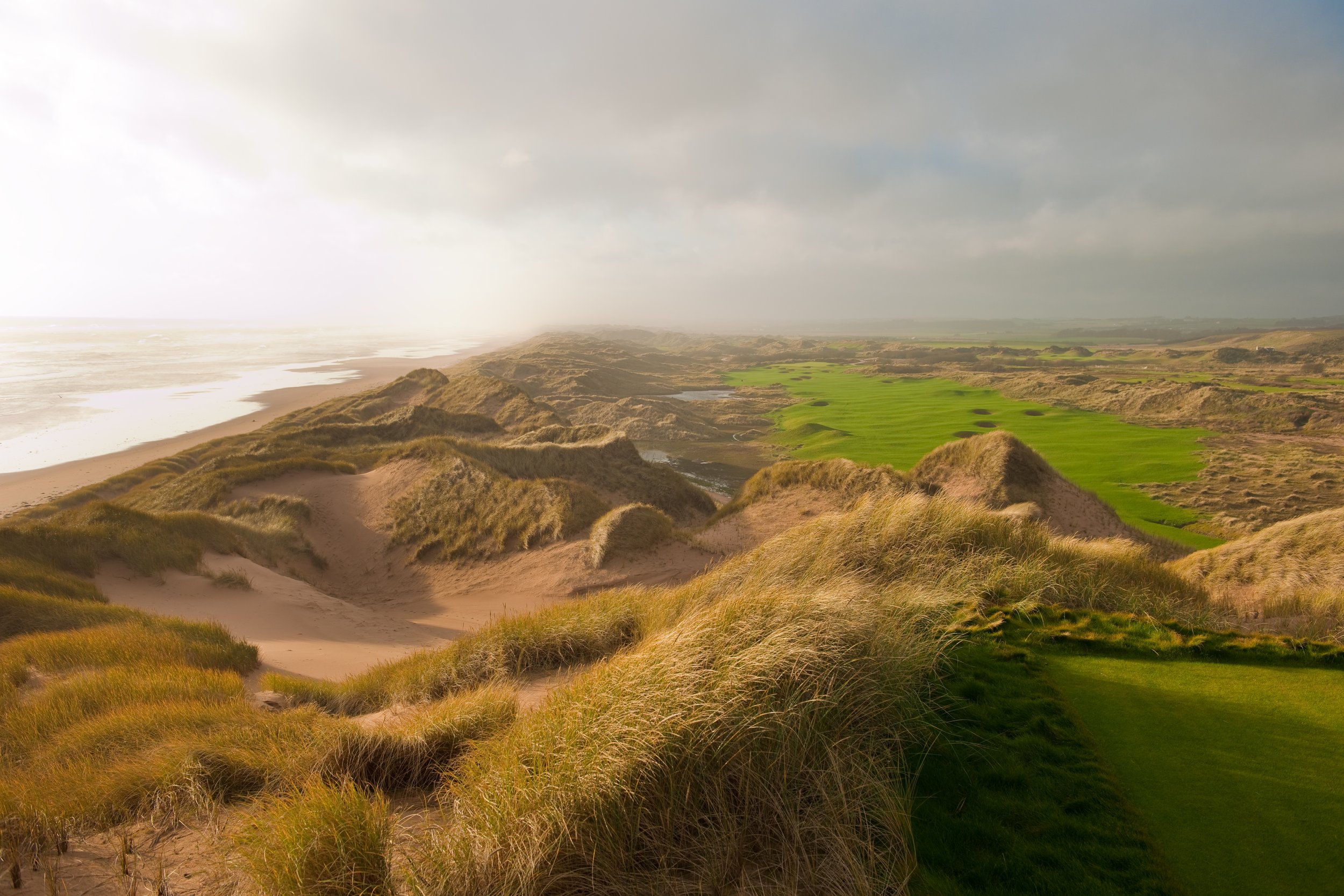
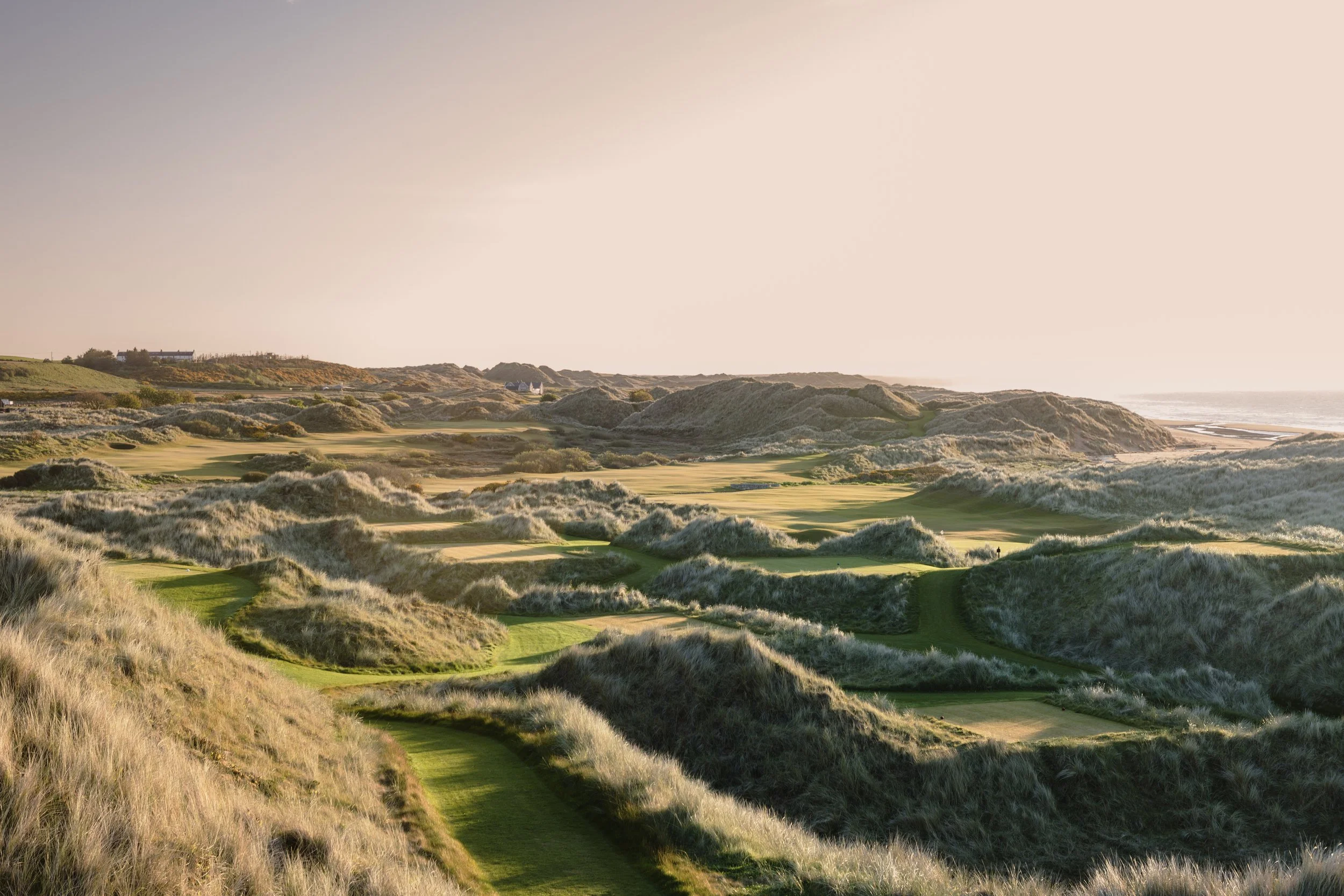
The Old Course at Trump International Scotland, situated on the rugged coastline of the Menie Estate in Balmedie, Aberdeenshire, stands as one of the most significant and polarizing developments in the history of modern golf course architecture. Opened in July 2012, the course was commissioned by the Trump Organization with the singular, hyperbolic ambition of creating "the greatest golf course in the world." Designed by the distinguished British architect Dr. Martin Hawtree, the layout is routed through some of the largest and most dramatic coastal sand dunes in the British Isles, offering a modern, high-octane interpretation of the classic Scottish links experience.
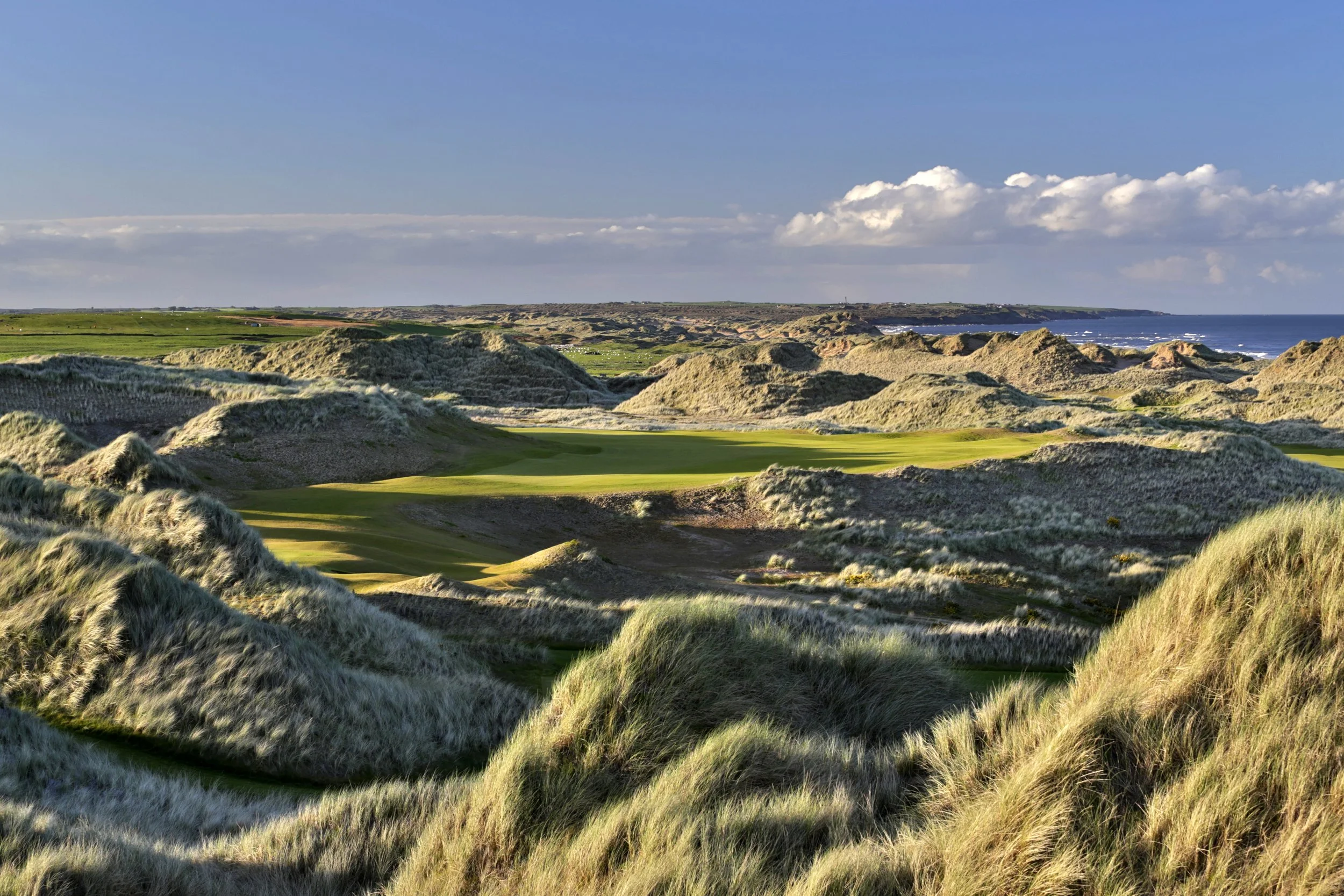
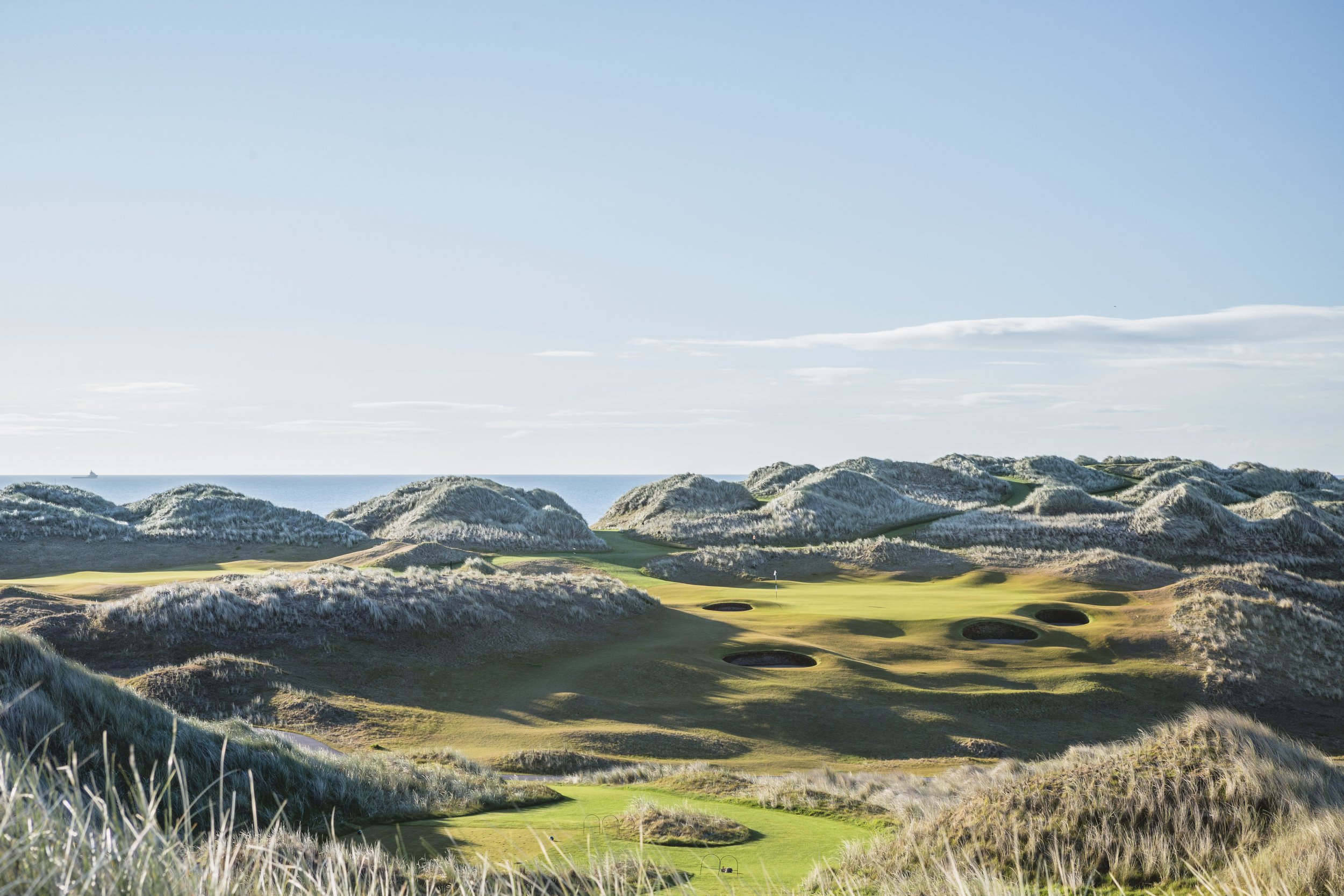
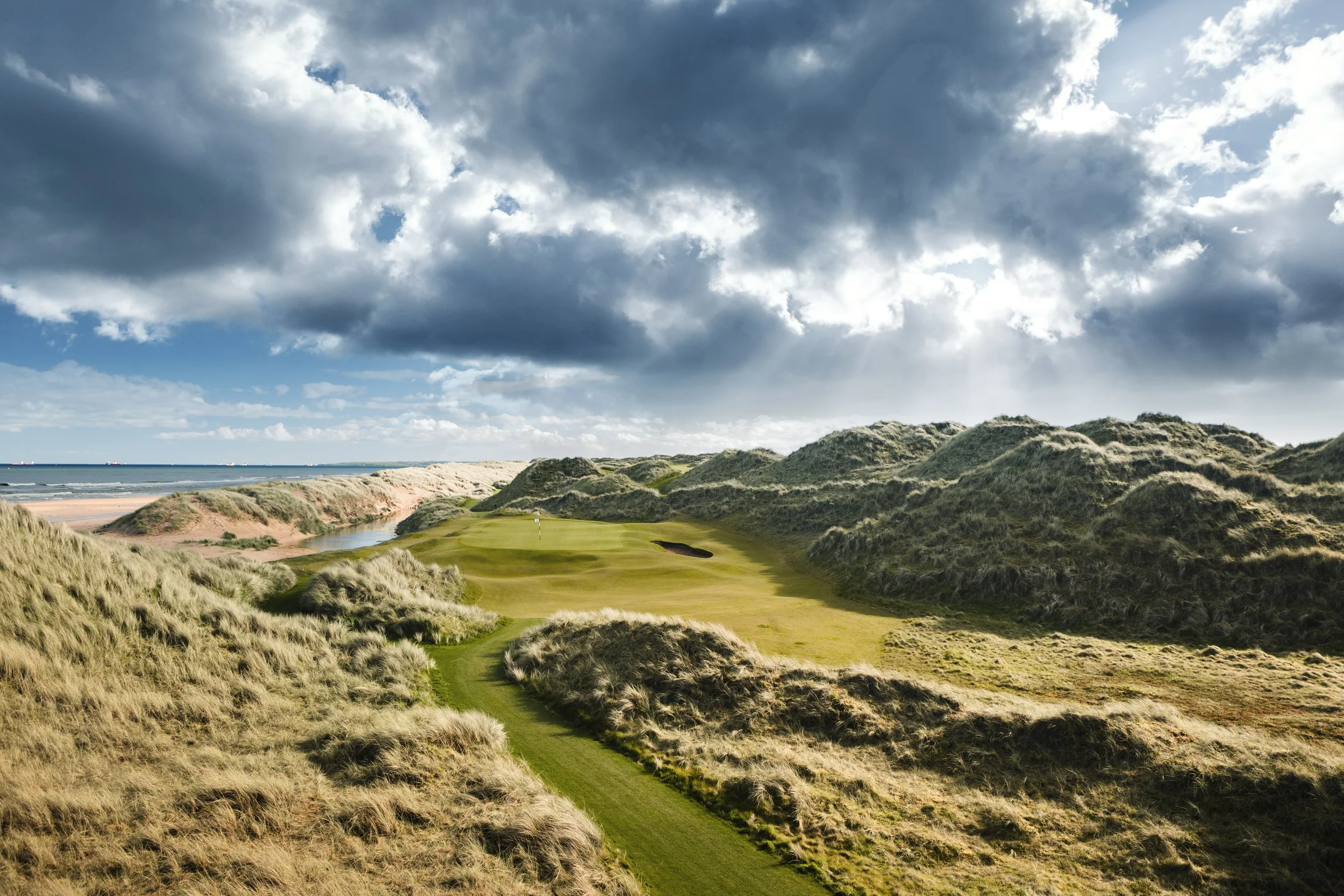
Hawtree’s mandate was to create a "modern classic." He sought to utilize the sheer vertical scale of the dunes to create a sense of isolation for the golfer. On many holes, the fairway is flanked by dune ridges so high that the player is completely cut off from the rest of the course. This creates an immersive, almost claustrophobic experience where the only elements are the player, the ball, the sand, and the sky.
The routing is a variation of the classic "out-and-back" loops. The course comprises two loops of nine holes, both returning to the clubhouse, which sits on a high point offering commanding views. This differs from the single loop of St Andrews, allowing for more operational flexibility. The orientation of the holes changes frequently, ensuring that the golfer is constantly recalibrating for the wind direction—a critical test in links golf.
Golf courses near Aberdeen
To. understand the Old Course at Trump International, one must first contextualize it within the rich tapestry of North East Scotland’s golfing heritage. Unlike the well-trodden "Golf Coast" of East Lothian or the Open Championship rota of Ayrshire, Aberdeenshire was, for decades, a region appreciated primarily by connoisseurs rather than the mass market of American golf tourism. The region boasts historic heavyweights such as Royal Aberdeen—the sixth oldest golf club in the world, founded in 1780—and Cruden Bay, a quirky, cult-classic links designed by Old Tom Morris and Archie Simpson.
These existing courses defined the character of Aberdeenshire golf: rugged, blind shots, ancient turf, and a raw connection to the North Sea. They were clubs built for members, evolved over centuries. Into this landscape entered the Trump Organization in the mid-2000s, proposing a development that was diametrically opposed to the local model: a built-from-scratch, ultra-luxury resort designed specifically for the high-net-worth international traveler, utilizing a scale of land that dwarfed its neighbors
Premier Golf courses near Aberdeen Scotland
The Outward Nine: Into the Dunes
Hole 1: "The Beginning" (Par 5, 541 - 658 yards) The opening hole is a statement of intent. Originally playing around 540 yards, the addition of a "Super Pro Tee" has extended it to a monstrous 658 yards for tournament play.The drive is played to a broad fairway that visually narrows at the landing zone. The strategic dilemma arises on the second shot: three cross bunkers guard the layup area, forcing the player to choose between a conservative lay-back or an aggressive carry to set up a pitch. The green sits proudly against a backdrop of wispy fescue dunes, establishing the visual language of the course immediately.
Hole 2: (Par 4, 443 yards) This robust par 4 demands a committed drive over a sea of marram grass. The fairway doglegs slightly, and the dunes framing the hole begin to rise in stature. The approach is often played into a crosswind, testing the player's ability to hold the ball against the breeze.
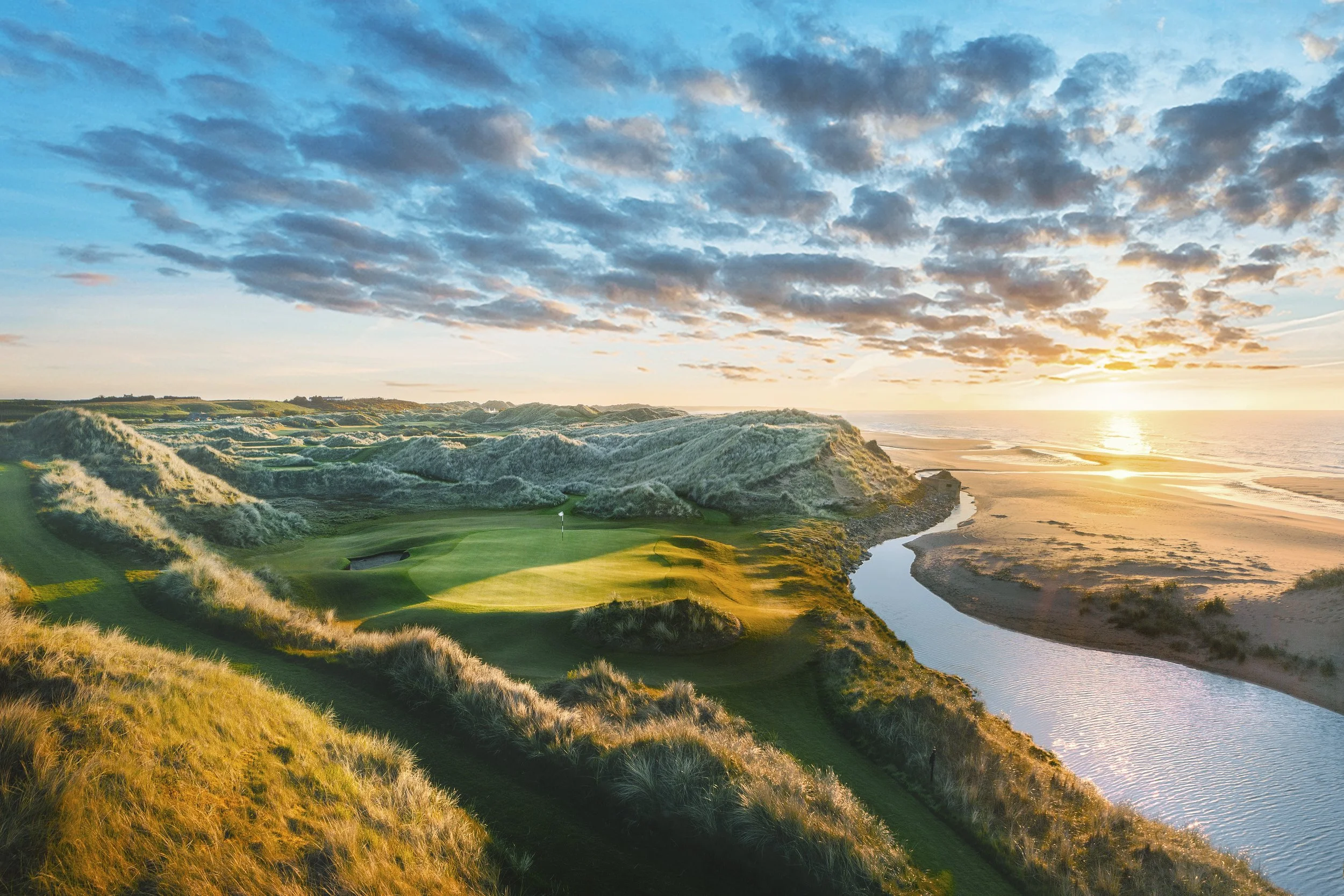
Hole 3: "Roche" (Par 3, 205 yards) Widely regarded as the first "signature" moment of the round, the 3rd hole brings the golfer to the water's edge. Described as "cheek by jowl" with the North Sea, the green is practically on the beach. The tee shot is visually intimidating; the entire hole is initially hidden by a dune ridge until the player steps up to the box. The green is guarded by a pot bunker on the right and severe run-offs on the left. If the wind is blowing off the sea (a "soldier's wind"), holding the green requires a purely struck iron. Caddies universally advise aiming for the center of the green, as greed is instantly punished here.
Hole 4: (Par 5, 563 yards) Following the delicacy of the 3rd, the 4th is a powerhouse par 5 played through a valley. Here, Hawtree utilizes water hazards—ancient burns and wetlands—that meander through the dunes. This is a departure from pure links golf (which typically lacks inland water), but it adds a strategic layer. The green is elevated, repelling weak approaches.
Hole 5: (Par 4, 386 yards) A shorter par 4 that serves as a strategic respite. The fairway is flanked by bunkers, but the length allows for a fairway wood or long iron off the tee. The approach is to a raised green, a recurring Hawtree motif that demands a high, soft flight—a difficult shot to execute in the heavy Scottish air.
Hole 6: "The Heath" (Par 3, 183 yards) The shortest hole on the course is often the most divisive. Hidden in a deep valley, the green is overshadowed by a towering dune on the left. This dune creates a microclimate where the wind swirls unpredictably. The visual intimidation is immense; the green feels tiny in the vastness of the dunes. A shot pulled left is dead, lost in the dune face; a shot pushed right finds heavy rough. It exemplifies the "short but deadly" archetype of links par 3s.
Hole 7: (Par 4, 281 yards) A drivable par 4 for the long hitter, but fraught with danger. The fairway is a crumpled rug of undulations, often leaving the player with a hanging lie for a delicate pitch. The risk-reward equation here tempts the ego, often leading to a bogey from a position of strength.
Hole 8: (Par 4, 500 yards) The longest par 4 on the course is a brute. The fairway runs alongside protected wetlands, adding an environmental hazard to the physical length. The green sits in a natural amphitheater below a series of imposing grassy dunes. Into a headwind, this hole is effectively a par 5 for many amateurs.
Hole 9: (Par 4, 470 yards) Returning towards the clubhouse, the 9th offers a brilliant driving vista. The tee is elevated, looking down on a fairway that ribbons through the sand. The landing area pinches in, and the approach is to a long, narrow green protected by hidden bunkers on the left. It is a stern conclusion to the front nine.
The Inward Nine: The Climb Home
Hole 10: "The Valley" (Par 5, 573 yards) The back nine opens with a visually stunning par 5. The drive is into a split fairway sunken into a massive valley, giving the player strategic options depending on the wind. The green is tucked into the dunes, creating an "extraordinary amphitheatre". It is a hole that rewards the strategic thinker who plots their way to the green rather than the bomber who tries to overpower it.
Hole 11: (Par 4, 445 yards) This hole features the "tallest vantage point on the course". From the tee, the player has a panoramic 360-degree view of the North Sea and the coastline. The hole is a sharp dogleg, tempting the player to cut the corner over the dunes. However, the penalty for missing is a lost ball. The green is raised and guarded by two pot bunkers on the left, demanding a precise approach.
Hole 12: (Par 4, 435 yards) A hole that offers a multitude of options off the tee. The fairway narrows significantly at the aggressive landing zone. The green is triangular, dominated by great dunes and classic pot bunkers.
Hole 13: (Par 3, 229 yards) A long par 3 playing through a valley. The green is large but contoured to feed balls away from the pin if the approach is not precise.
Hole 14: "The Pulpit" (Par 4, 445 yards) Often cited as the "postcard hole" of the course, the 14th features the tallest tee box on the layout. The view down to the fairway, which winds through a spectacular valley of duneland with the sea as a backdrop, is breathtaking. The drive hangs in the air, exposed to the wind. The green is protected by a lone pot bunker to the right, but the main challenge is the wind, which is funneled through the dunes.
Hole 15: (Par 4, 392 yards) A strong par 4 requiring a blind drive over a ridge. The reveal of the green, sitting naturally in a dune slack, is a classic links moment.
Hole 16: (Par 3, 195 yards) The final par 3 is a test of iron play. Exposed to the full force of the elements, it requires a piercing flight to hold the green.
Hole 17: (Par 4, 466 yards) A relentless par 4 that plays up a valley, known as one of the hardest holes on the course. The fairway is lined with thick rough, and the green is one of the most undulating, making two-putting a challenge.
Hole 18: "The Climax" (Par 5, 651 yards) The closing hole is an epic par 5 measuring over 650 yards from the back tees. The elevated tees offer superlative views of the sea and the distant Aberdeen skyline. The fairway is hugged by two water hazards on the left—large wetlands that punish a hooked drive. Sneaky bunkers litter the landing zones. It is a fittingly dramatic conclusion, designed to produce a definitive result in match play. A birdie here is a career highlight; a double bogey is a common reality