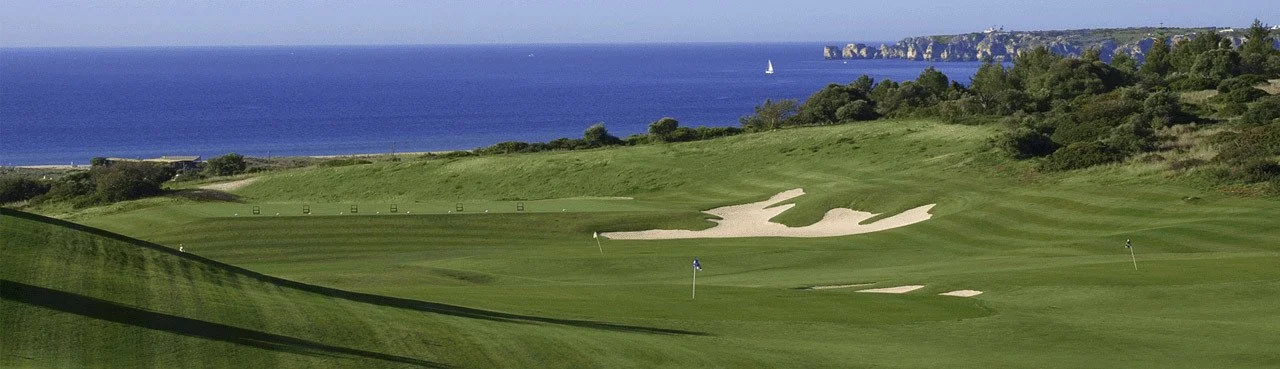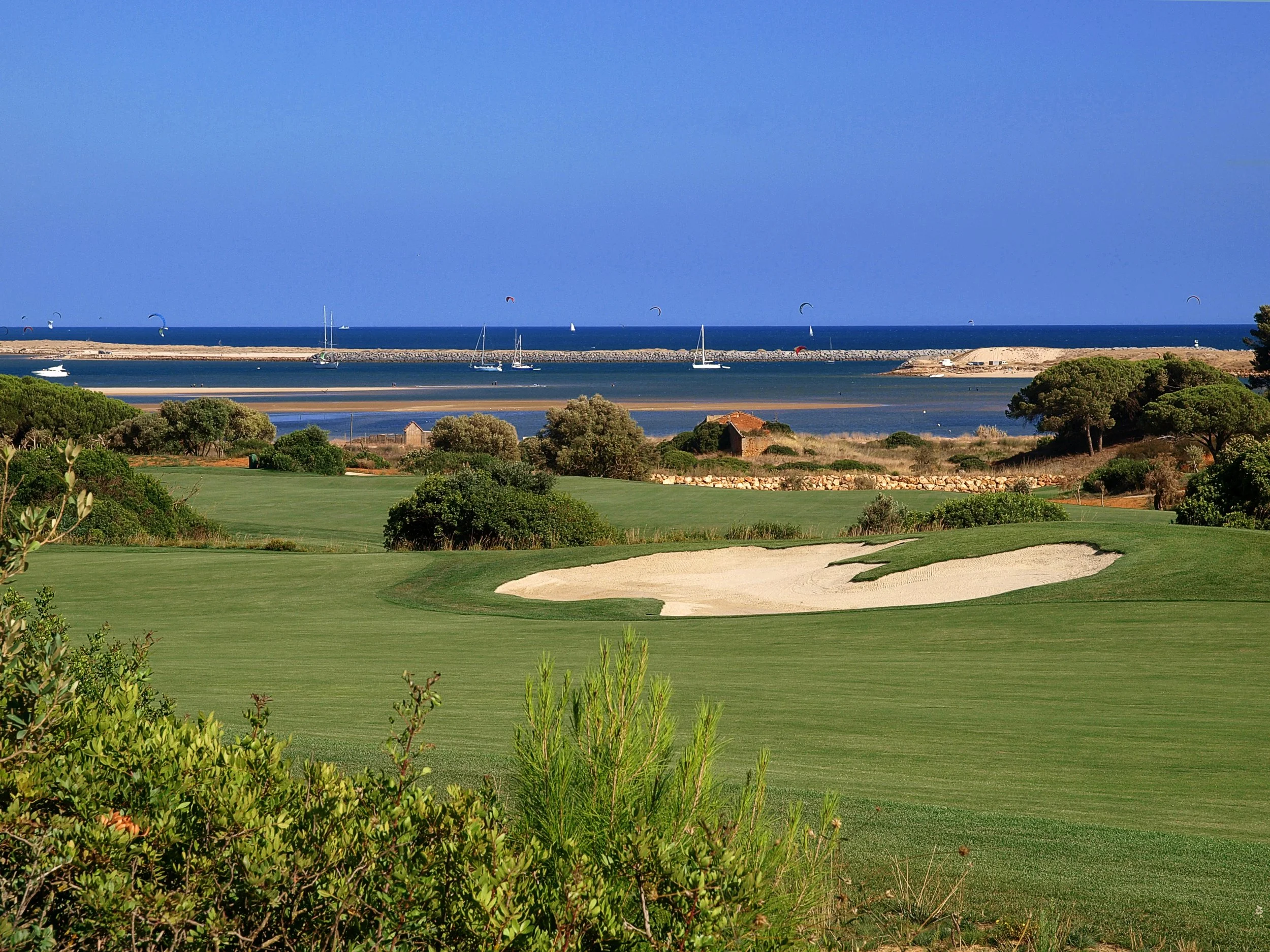
Experience the Stunning Challenges of Palmares Golf Course
Palmares Golf original course, opened in 1975, was the work of Frank Pennink, a legendary British golf architect and writer. Pennink, known for his work on the Old Course at Vilamoura, identified the site's unique potential: a dramatic hillside covered in almond, fig, and palm trees, cascading down to the dune system of Meia Praia.
For over three decades, "Old Palmares Golf" was characterized by its eccentric charm. It was a tale of two nines: a hilly, scrub-covered front nine that offered punishing climbs and spectacular views, and a flat, links-like back nine that ran alongside the railway line and the beach. It held a special place in the hearts of visiting British golfers and expatriates, known for its friendly, unpretentious atmosphere and the "Azylos" bar—a rustic stopover that defined the club's social fabric. However, as the global standards for luxury golf tourism rose in the early 2000s, the infrastructure of the old course began to lag behind the premium expectations of the modern traveler.
The Onyria Acquisition and the Robert Trent Jones Jr. Vision
The pivotal moment in the property’s history was its acquisition by the Onyria Golf Resorts group. The vision was not merely renovation but a complete metamorphosis. In 2008, the bold decision was made to close the facility entirely to facilitate a comprehensive redevelopment. The mandate was clear: to create a world-class 27-hole facility that would maximize the potential of the unique amphitheater setting and elevate the Western Algarve to a primary golf destination.
The selection of Robert Trent Jones Jr. (RTJ II) as the architect was a strategic statement. RTJ II, whose portfolio includes major championship venues like Chambers Bay, brought a philosophy rooted in environmental harmony and strategic complexity. He recognized the site as a "unique environment" offering a "tremendous depth of personality". Jones noted that the vast ocean views, dramatic elevation changes, and intimate valleys provided the raw materials for a course of significant character.
The redevelopment involved substantial earthmoving to stabilize the terrain and optimize drainage, yet the design remained faithful to the land's natural contours. Jones's master plan divided Palmares Golf into three distinct nine-hole loops—Alvor, Lagos, and Praia—allowing for a modular golf experience where players could combine different loops to create varied 18-hole rounds. This flexibility is a critical operational advantage, ensuring variety for members and long-stay guests while managing traffic flow during peak seasons
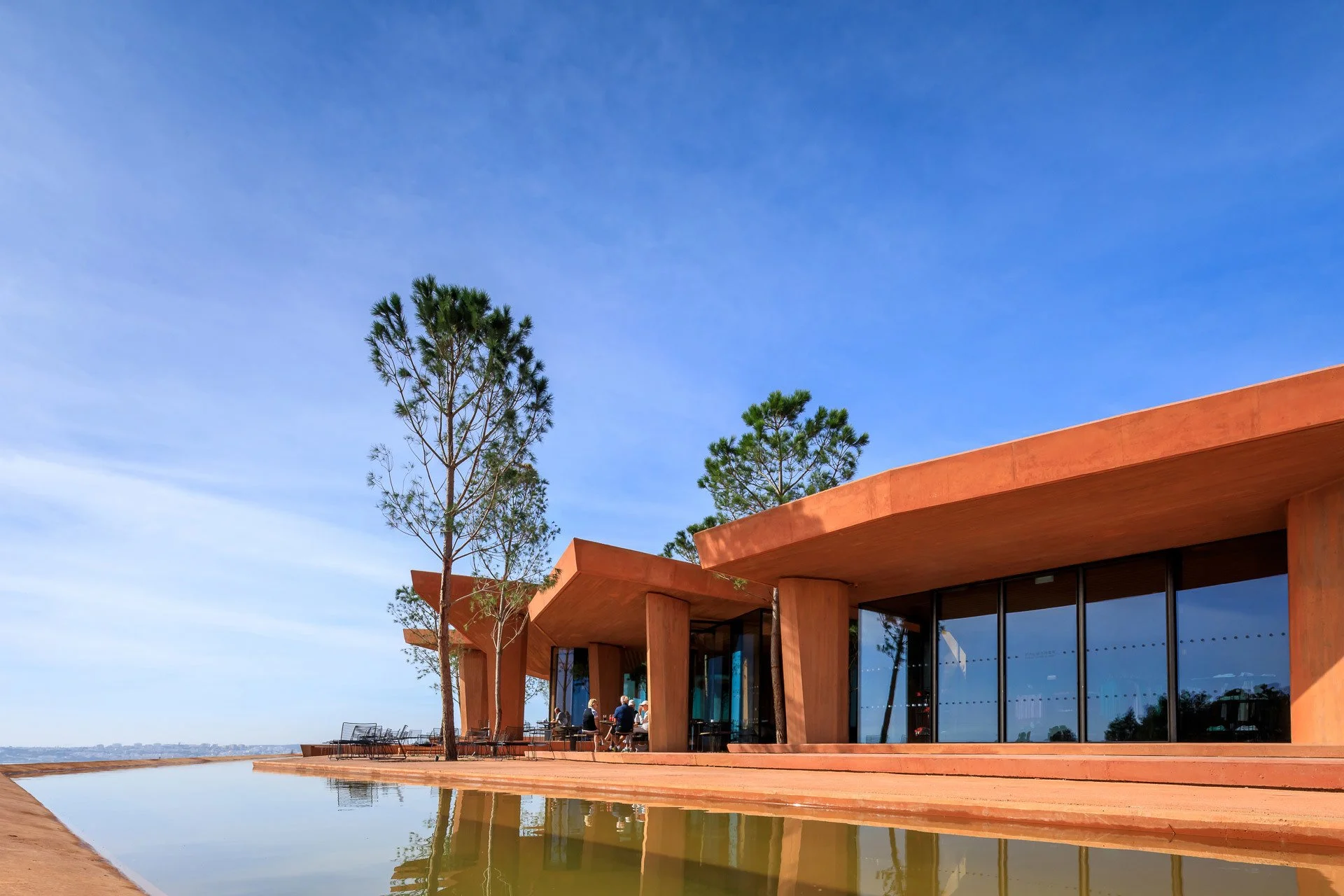
The Club House at Palmares Golf
In the world of golf, clubhouses are often exercises in nostalgia—pastiches of colonial or traditional styles. Palmares broke this mold completely with the opening of its new clubhouse in Autumn 2020. Designed by RCR Arquitectes, the Catalan studio that received the Pritzker Architecture Prize in 2017, the building is a statement of modern art.
The architectural concept is rooted in the "genius loci" (spirit of the place). The architects sought to create a building that did not dominate the landscape but rather facilitated the viewing of it.
Materiality: The most striking feature is the use of red-pigmented concrete. This was a deliberate choice to echo the red sandstone cliffs and clay soil characteristic of the Lagos region. This chromatic integration allows the substantial structure to settle into the hillside, appearing as if it were extruded from the earth itself.
Geometry and Light: The design employs sharp, angular planes and vast cantilevers. These heavy elements are balanced by floor-to-ceiling glass walls that dissolve the boundary between interior and exterior. The architecture functions as a camera lens, framing specific vistas: the Alvor Estuary to the east, the Atlantic Ocean to the south, and the Monchique mountains to the north.
The "Unforgettable" Arrival: The entry sequence is choreographed to build anticipation. Guests arrive at a relatively opaque facade, only to be released into a space of light and panoramic views upon entering. This "reveal" is central to the visitor experience, creating a moment of awe that sets the tone for the day.
Beyond its aesthetic triumph, the clubhouse is a highly functional hub for resort operations.
Golf Reception & Pro Shop: A modern retail space offering premium apparel and equipment (Callaway rental clubs are available).
Concierge: A dedicated desk handles real estate inquiries, restaurant reservations, and off-site excursions.
Locker Rooms: Luxuriously appointed facilities that match the 5-star standard of the rest of the property.
The clubhouse has rapidly accrued accolades, validating the bold design choice.
World's Best Golf Clubhouse 2025: A prestigious victory at the World Golf Awards, cementing its status as a global benchmark.
Europe's Best Clubhouse (Shortlist 2024): Recognized for its innovation and excellence.
Palmares Golf 3 Nines
The Alvor loop is defined by its verticality. The holes traverse the hillsides, requiring players to negotiate uphill drives and downhill approaches where distance control is complicated by gravity and wind. The pine trees serve as both aesthetic frames and strategic hazards, demanding accuracy off the tee.
Hole 1 (Par 4, 387m): The round begins with a welcoming but deceptive par 4. The fairway is generous, but the approach is played to a green that can be difficult to hold if the player is coming in from the rough. The elevation change immediately introduces the player to the physical demands of the loop.
Hole 2 (Par 3, 190m): A robust par 3 that tests long-iron play early in the round. The green is guarded, and the wind swirling through the pine tops can make club selection a guessing game.
Hole 4 (Par 5, 519m): This par 5 is a true three-shot hole for most players. The fairway winds through the trees, and the green complex is protected by strategic bunkering. It demands patience; trying to overpower this hole often leads to trouble in the pines.
The "Tease" (Holes 6 & 7): These holes are pivotal in the narrative of the round. As the player moves through the sixth and seventh, the dense parkland momentarily gives way to open vistas. This "momentary preview" of the dunesland below serves as a visual connection between the high ground and the sea, reinforcing the cohesiveness of the 27-hole layout.
Hole 9 (Par 4, 374m): The finishing hole of the Alvor loop is a dramatic uphill test. It plays towards the clubhouse, which sits perched like a citadel above the green. The approach shot must be struck with conviction to carry the elevation difference. The backdrop of the architectural marvel creates a stadium-like atmosphere, putting pressure on the final putt.
The Lagos loop begins with the same parkland character as Alvor but quickly transitions. The inclusion of two lakes on the 3rd (Hole 12) and 6th (Hole 15) holes forces players to consider carry distances carefully.
Hole 10 (Hole 1 of Loop, Par 4, 313m): A short par 4 that invites a birdie but punishes carelessness. Position off the tee is vital to attack the pin.
Hole 12 (Par 3, 136m): This is one of the most picturesque and dangerous short holes on the property. It features a water carry to a green that is also guarded by sand. While short, the psychological pressure of the water often leads to tentative swings and watery graves.
Hole 15 (Par 5, 433m): A strategic par 5 where water again comes into play. The layup must be calculated to leave a comfortable yardage, avoiding the hazard that flanks the fairway.
The Dune Transition (Holes 17 & 18): The final two holes of this loop immerse the golfer into the expansive dune lands on the southwest portion of the site. Here, the turf becomes firmer, the trees disappear, and the wind becomes the primary defense. The 18th is a grueling climb back to the clubhouse, often played into the prevailing wind, requiring two mighty blows to reach the green in regulation.
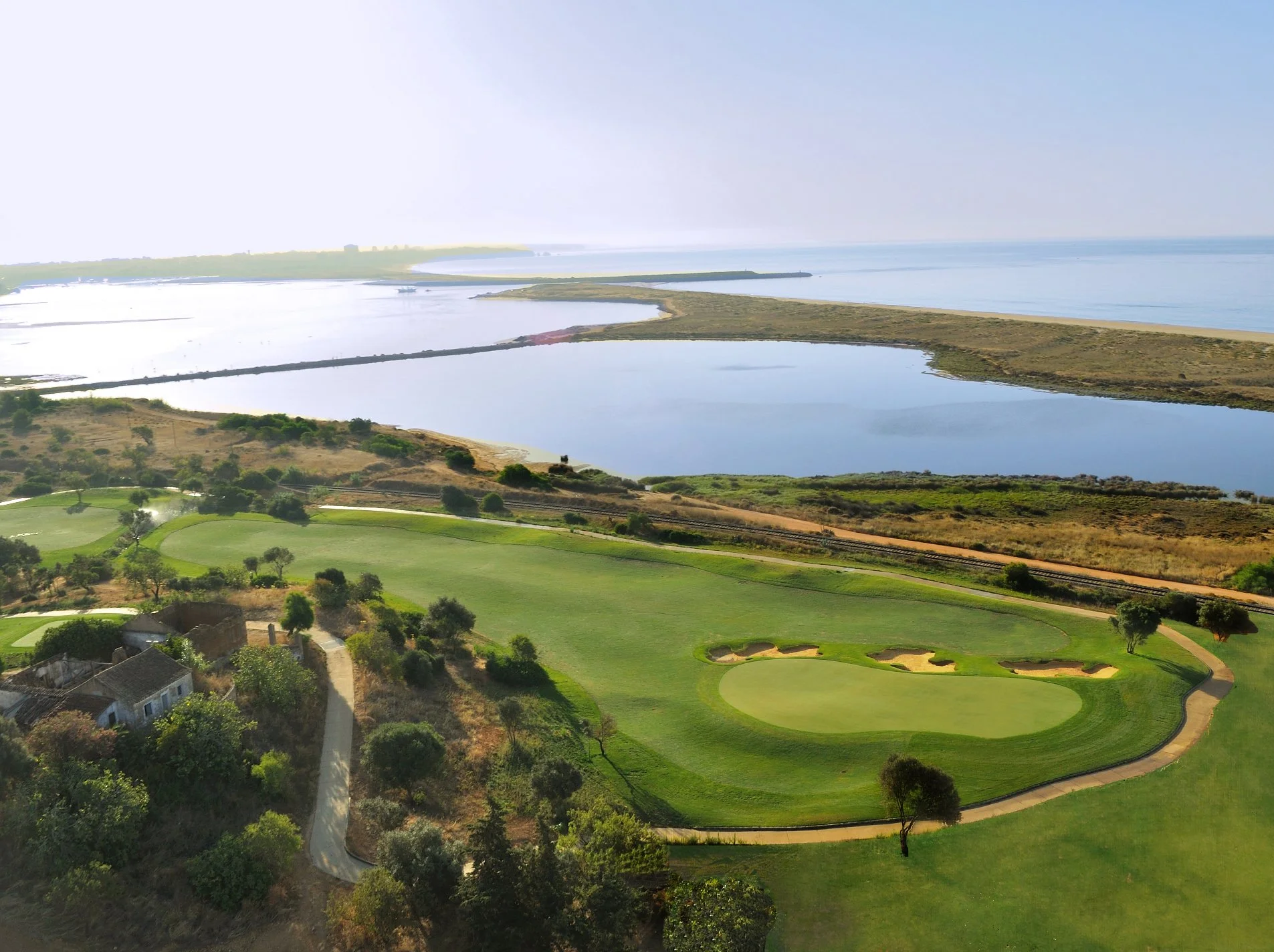
The Praia (Beach) Course is the jewel in the Palmares crown. It provides the closest approximation to true links golf found anywhere in the Algarve. It is raw, exposed, and exhilarating.
This loop is situated on the low-lying land between the railway line and the ocean. The terrain is sandy, undulating, and dominated by coastal scrub and dunes.
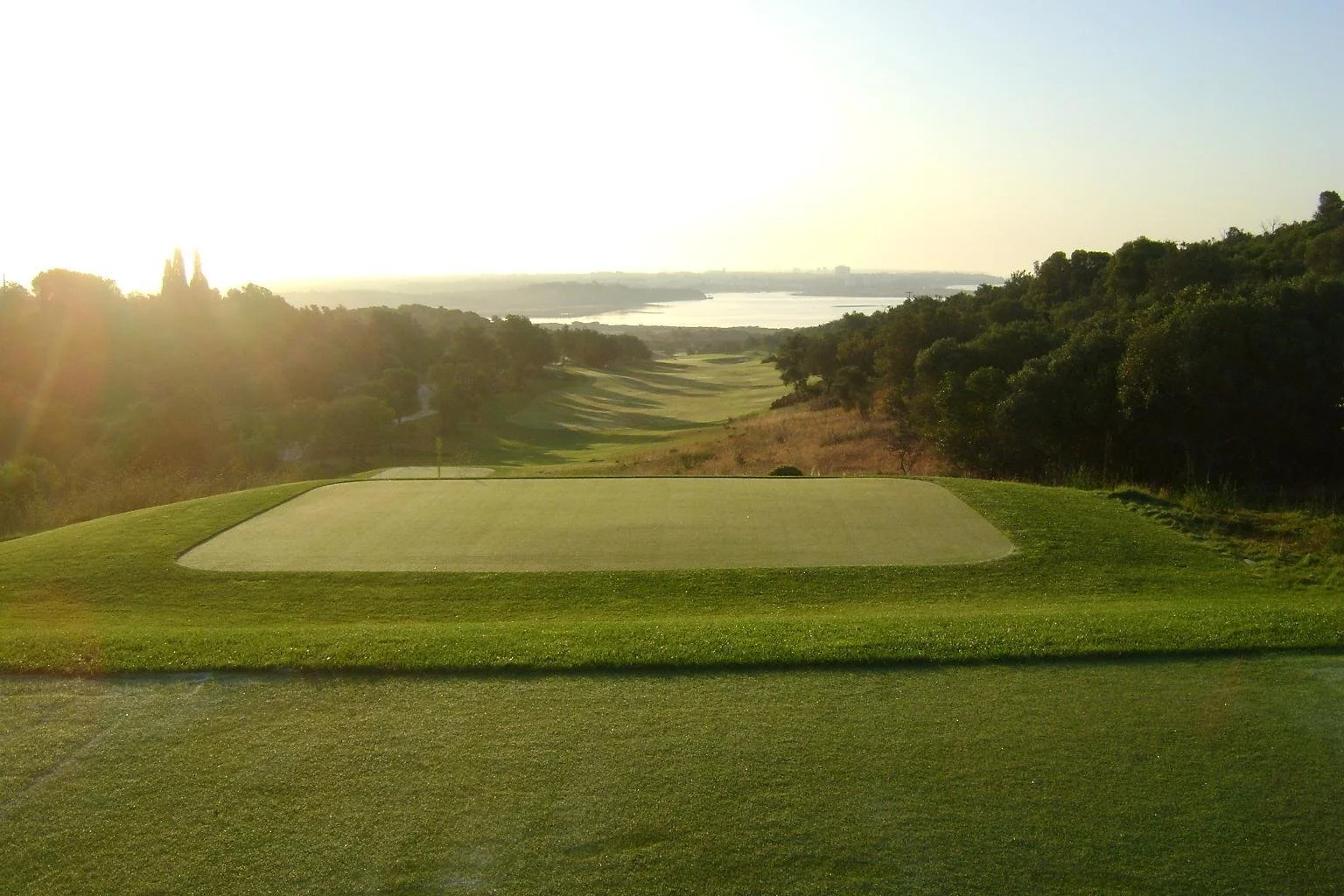
Hole 19 (Par 4, 335m): The loop opens with a dramatic downhill drive from the high ground near the clubhouse. The fairway doglegs right, leading the player down towards the railway line. The descent is a visual thrill, signaling the transition from the "earth" of the hills to the "sand" of the coast.
The "Links Square" (Holes 20-23): Upon crossing the railway tracks, the player enters a distinct zone.
Hole 20 (Par 5, 460m): This hole runs parallel to the beach. Downwind, it is reachable in two, but the fairway is tight, bounded by dunes on both sides.
Hole 21 (Par 3, 145m): A short hole that is entirely exposed to the Atlantic breeze. A "knock-down" shot is often the prudent play here to keep the ball under the wind.
Hole 22 (Par 5, 470m): Another par 5 that plays along the coastline. The sound of the crashing waves is audible, adding a sensory dimension to the strategic challenge.
Hole 24-26: The course crosses back over the railway, but maintains the sandy, links-like character as it winds through the lower dunes.
Hole 27 (Par 5, 465m): The grand finale. This hole rises out of the dunes, traversing a deep valley to an amphitheater green situated below the clubhouse. It is a "heroic" hole in the classical sense, demanding a strong drive, a tactical layup, and a precise approach to a green that is watched by diners on the clubhouse terrace.